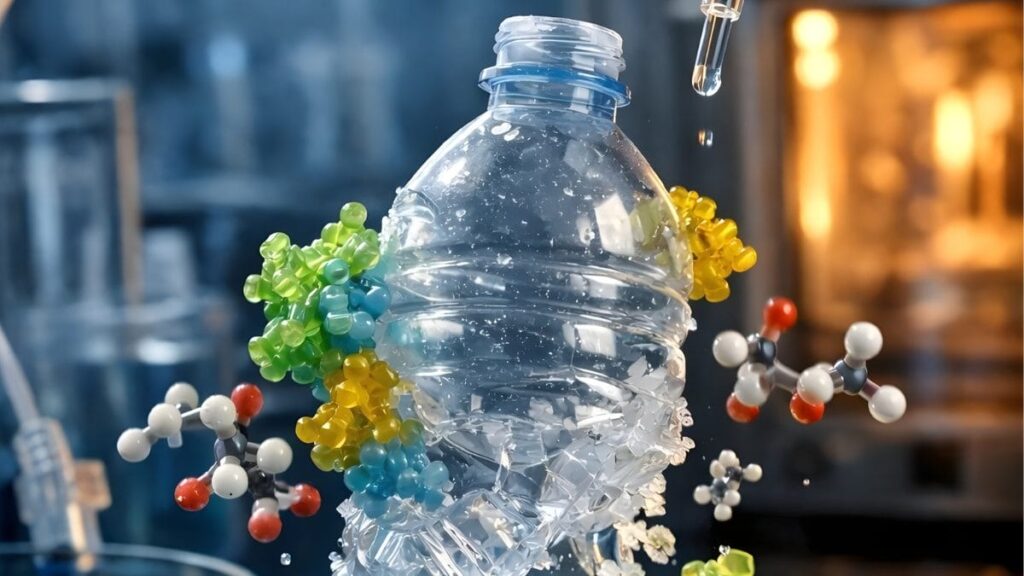
You finish a bottle of soda, toss it into the blue recycling bin, and give yourself a mental high-five for saving the planet. But if we are being completely honest about the current state of global waste, that plastic bottle is likely just taking a scenic route to the landfill.
Traditional mechanical recycling involves melting plastic down, which degrades its molecular quality. After a couple of cycles, that high-grade water bottle turns into brittle park bench material, and eventually, trash. But as of May 2026, the deep-tech startup sector is proving that we do not have to melt plastic to recycle it. We just need to feed it to the right bugs.
Welcome to the booming industry of biological upcycling, where scientists and entrepreneurs are engineering microscopic, plastic-eating enzymes to digest our garbage and turn it back into virgin material.
The Molecular Scissors
To understand how these startups are planning to empty our landfills, we need to look at how enzymes actually work. In nature, enzymes are basically biological scissors. For example, protease enzymes in your stomach cut up the proteins in your food so your body can absorb them.
A few years ago, scientists discovered a naturally occurring bacteria outside a bottle recycling facility in Japan that had evolved to eat polyethylene terephthalate (PET) — the plastic used in most water bottles and clothing. The problem? Nature works slowly. The natural enzyme took months to break down a single bottle, which is functionally useless for industrial waste management.
This is where artificial intelligence and synthetic biology collided. Researchers, most notably the teams originating from the University of Texas at Austin, used machine learning to train AI on thousands of protein structures. They engineered supercharged variants, like FAST-PETase.
“Instead of taking months, these lab-engineered enzymes can break down highly dense plastic waste into its fundamental chemical building blocks in a matter of days, and sometimes hours, without requiring massive amounts of industrial heat.”
When the enzyme digests the plastic, it leaves behind two raw liquid chemicals: terephthalic acid and ethylene glycol.These are the exact virgin monomers used to create petroleum-based plastics, meaning we can build brand new bottles without ever drilling for more oil.
From the Petri Dish to the Factory Floor
Having a miracle enzyme in a university lab is great, but processing the 400 million tons of plastic we generate annually requires massive scale. In 2026, we are finally seeing these startups transition from theoretical research to massive commercial infrastructure.
The most prominent example is Carbios. This French biotech company has moved beyond small demonstration phases and is actively building the world’s first commercial-scale PET biorecycling plant in Longlaville, France. Backed by heavy government grants and partnerships with consumer giants like L’Oréal and PepsiCo, their proprietary C-ZYME technology is designed to process 50,000 tons of post-consumer plastic waste every single year.
Meanwhile, in London, a startup called Epoch Biodesign recently secured heavy Series A funding to expand their own library of plastic-digesting enzymes. They use robotic automation to create enzymes capable of transforming mixed wasteб the really stubborn, dirty plastic that traditional recycling centers throw awayб into valuable chemical products at room temperature.
The Wardrobe Revolution
Plastic bottles are only half the problem. The “fast fashion” industry creates mountains of synthetic textile waste. Traditional recycling cannot handle a shirt that is a blend of cotton, polyester, and spandex. You simply cannot un-weave it.
Startups like the US-based Protein Evolution and Australia’s Samsara Eco are tackling this exact issue by throwing enzymes at our old laundry. Samsara Eco recently made headlines by partnering with athletic brands like Lululemon to create the world’s first enzymatically recycled nylon garment.
Using biology to recycle textiles offers massive factual advantages over traditional chemical recycling:
- No sorting required: The enzymes specifically target only the synthetic plastic polymers, completely ignoring buttons, metal zippers, and natural cotton fibers.
- Energy efficiency: Traditional chemical recycling requires heating heavy pressurized vats to 300°C. Engineered enzymes prefer to do their work in warm water.
- Infinite loops: Because the process reduces the material to pure molecules rather than melted sludge, the resulting plastic can be recycled infinitely without ever losing structural integrity.
The Major Players of 2026
If you are wondering who is leading the charge in the biological upcycling race right now, here is a quick look at the heavy hitters successfully navigating the deep-tech sector:
| Startup / Tech | Core Technology | Primary Recycling Target |
| Carbios | C-ZYME (Industrial enzymatic depolymerization) | Clear and colored PET bottles, food trays |
| Epoch Biodesign | AI-generated room-temperature enzymes | Blended plastics and chemical recovery |
| Samsara Eco | AI-engineered “Eos Eco” system | Nylon 6,6 and mixed textile waste |
| Protein Evolution | AI-driven protein design for textiles | Old clothing and synthetic fabrics |
The Bottom Line
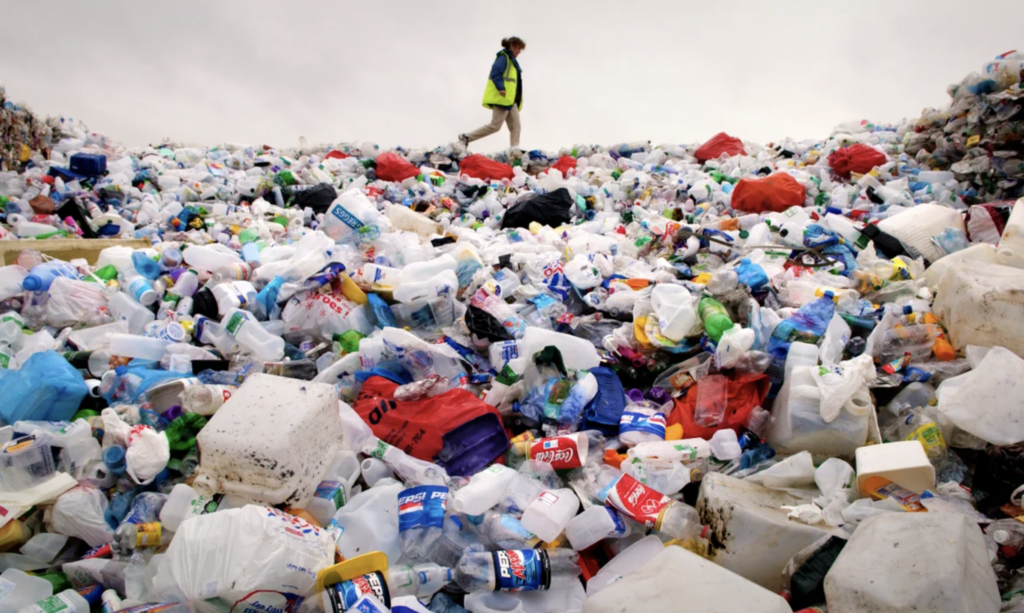
For decades, we have treated plastic as a permanent stain on the planet. But the 2026 startup ecosystem is proving that plastic is actually an incredibly valuable resource, provided we have the right biological tools to unlock it.
By treating a local landfill like a chemical goldmine, these startups are not just cleaning up the environment; they are building a true circular economy. The next time you buy a “recycled” water bottle or a new athletic shirt, there is a very good chance it was manufactured by a microscopic, hungry enzyme.