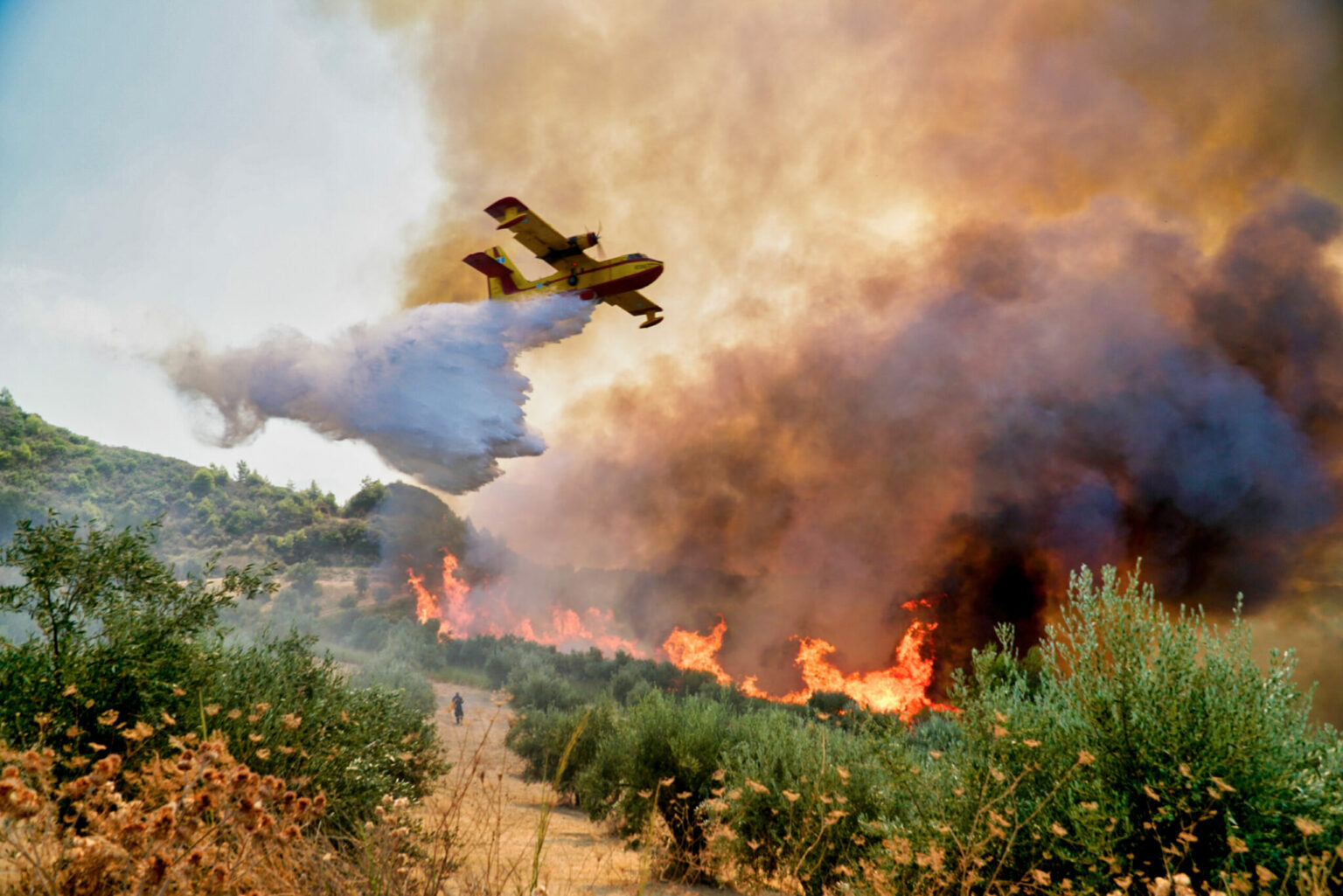
When wildfires ravage forests across the United States, the damage extends far beyond charred landscapes. These disasters destroy ecosystems, threaten communities, and release massive amounts of carbon into the atmosphere. But what if the same technology that powers self-driving cars could help prevent these catastrophic events before they spiral out of control?
Enter Gaia AI, an MIT and Harvard startup that’s bringing autonomous vehicle technology into America’s forests. By equipping foresters with sensor-laden backpacks, the company is revolutionizing how we measure and manage forests, providing the precise data needed to assess wildfire risk and manage carbon credits with unprecedented accuracy.
From Self-Driving Cars to Forest Management
The journey from autonomous vehicles to forest conservation might seem unexpected, but for Gaia AI co-founder and CEO Peter McHale, it was a natural progression. After spending years working on perception systems for self-driving cars at Ford, Argo AI, and May Mobility, McHale recognized that the same sensor technologies and AI algorithms that help cars navigate urban environments could transform forestry.
The insight was simple but powerful. Autonomous vehicles use LiDAR sensors, cameras, and sophisticated AI to detect and classify objects in real-time. Forests, while vastly different from city streets, present a similar challenge: measuring and understanding complex three-dimensional environments with thousands of individual elements.
Traditional forest measurement methods are painfully slow and imprecise. Foresters manually measure trees one by one, wrapping tape measures around trunks and recording data by hand. It’s time-consuming, expensive, and prone to human error. High-resolution satellite imagery offers speed but can’t see below the forest canopy, where tree trunks hold the majority of biomass and carbon. The data gap has left forest managers, timber companies, and carbon credit buyers without the accurate information they need to make informed decisions.
The Technology Behind the Backpack
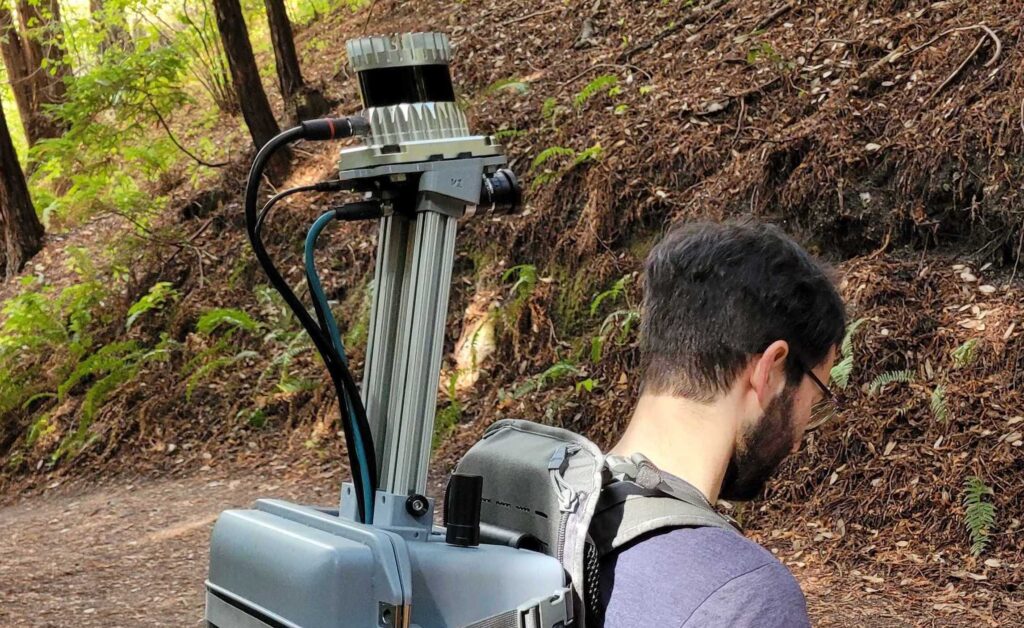
Gaia AI’s solution centers on a proprietary backpack system that combines multiple data collection technologies. Foresters wear the lightweight unit while walking traditional forest survey paths, automatically collecting detailed measurements as they go.
The backpack employs LiDAR technology, the same laser-based system used in autonomous vehicles to create detailed three-dimensional maps. Unlike satellite imagery that only captures what’s visible from above, LiDAR penetrates the forest canopy to measure individual trees below with millimeter-level precision. The system records tree count, diameter at breast height, and tree height while creating a comprehensive three-dimensional point cloud of the entire forest structure.
But Gaia AI doesn’t rely on a single technology. Following the autonomous vehicle playbook, the company combines LiDAR data with computer vision from cameras and satellite imagery. Each sensor excels at different tasks. Satellite data provides broad coverage and context. LiDAR captures precise below-canopy measurements. Computer vision helps classify tree species and assess forest health. By fusing these data sources through AI algorithms, Gaia AI creates a more complete and accurate picture than any single technology could provide alone.
The company claims its system measures forests 100 times faster than traditional manual methods. What used to take several minutes per tree now happens in seconds as foresters walk through the forest. The automated data processing means results are available quickly, without weeks of manual calculations.
From Carbon Credits to Wildfire Risk
Gaia AI initially focused on solving trust issues in the carbon credit market. Forest carbon offsets depend on accurate measurements of how much carbon a forest actually stores, but verification has historically been difficult and expensive. The company’s technology provides the high-resolution data that carbon credit buyers need to feel confident their investment genuinely represents a ton of sequestered carbon.
The applications quickly expanded beyond carbon markets. Timber companies use Gaia’s data to optimize harvest planning and maximize value from every tree. Private landowners gain insights to better manage their forestry operations. Conservation organizations can verify the effectiveness of their protection efforts with concrete measurements.
Most significantly, Gaia AI has begun working with the U.S. Forest Service to scale wildfire risk management across the country. Accurate forest data is crucial for assessing wildfire risk. Knowing the density, species composition, and fuel load of a forest helps fire managers predict how fires might spread and where preventive measures are most urgently needed. Traditional assessment methods simply can’t provide this level of detail at scale.
Wildfires in the United States cause an average of 12 deaths annually and cost at least $3.2 billion, with severity increasing across much of the country. Climate change is driving hotter temperatures, prolonged droughts, and shifting weather patterns that make forests more vulnerable. Each year, wildfires consume approximately 400 million hectares of forest cover worldwide, with 90 percent caused by human activity.
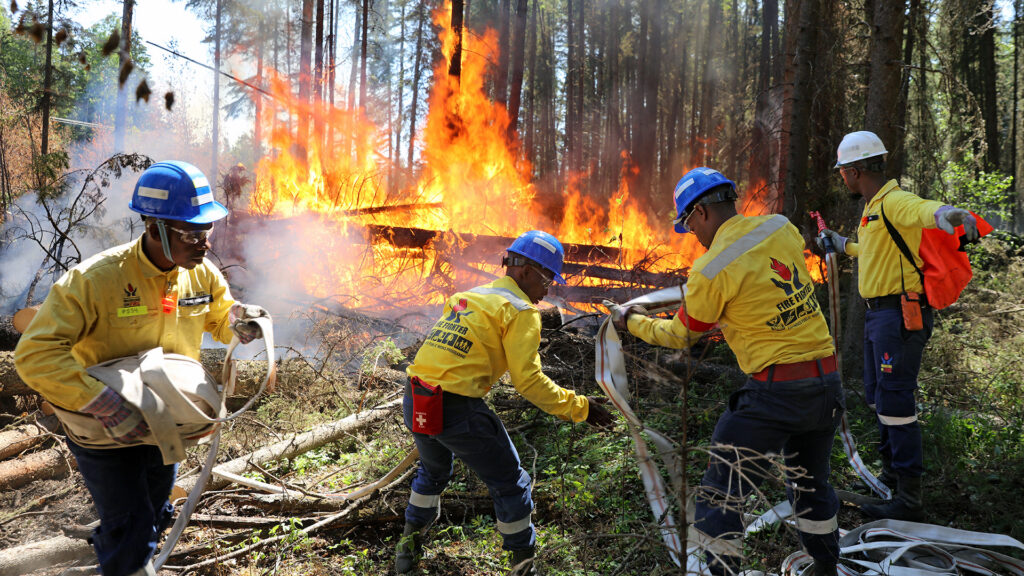
The window for effective intervention is narrow. Once fires reach a certain size, they become nearly impossible to contain. Early detection and prevention are critical, but both require understanding forest conditions in detail. Gaia AI’s technology provides forest managers with the precise, current data they need to identify high-risk areas, plan fuel reduction treatments, and allocate resources effectively.
Building the Google of Forestry
Gaia AI raised $3 million in pre-seed funding in 2022, led by E14, with participation from Ubiquity Ventures, Space Capital, and SOSV’s HAX accelerator. The company has since partnered with major timber companies and the U.S. Forest Service, executing standing and volume determination projects across the country. Their data integrates seamlessly with existing forest management systems, making adoption easier for organizations already using standard tools.
The team hasn’t stopped innovating. Currently weighing twenty pounds, the backpack system is being refined to reach a more manageable fifteen pounds in future iterations. The company continues developing its AI algorithms, training them on ever-larger datasets to improve accuracy and expand capabilities.
McHale’s long-term vision is ambitious. He wants Gaia AI to become the Google of forestry, utilizing advanced data capabilities to solve the biggest problems holding back the potential of nature while making timber companies profitable. The company positions itself not as a replacement for foresters but as a tool to augment their capabilities, freeing skilled professionals from tedious measurement tasks so they can focus on the complex decisions that require human judgment and experience.
A New Model for Conservation Technology
Gaia AI represents a broader trend in climate technology: applying cutting-edge tools from one industry to solve urgent problems in another. The autonomous vehicle industry has invested billions in sensor technology and perception AI. By adapting these proven technologies for forestry, Gaia AI bypassed years of development time and created a solution that works today.
The company’s approach also highlights an important principle in conservation technology. Rather than trying to automate away human expertise, Gaia AI designed its system to work within existing forester workflows. Foresters still walk survey paths and make management decisions, but they’re armed with far better data than ever before. This human-in-the-loop approach increases adoption while ensuring that the nuanced understanding of forest ecosystems that comes from experience remains central to decision-making.
As wildfires grow more frequent and intense, technologies like Gaia AI’s become increasingly essential. Better forest data means better risk assessment, more effective prevention, and faster response when fires do occur. It means carbon credits backed by verifiable measurements, giving climate solutions the credibility they need. And it means timber operations that can balance profitability with sustainability through precise, data-driven management.
The fight against catastrophic wildfires won’t be won by any single technology. It requires a combination of better forest management, improved detection systems, coordinated response efforts, and communities designed to coexist with fire-prone landscapes. But by bringing the precision and scale of autonomous vehicle technology into the forest, Gaia AI is providing one critical piece of the puzzle: the accurate, actionable data that turns good intentions into effective action.